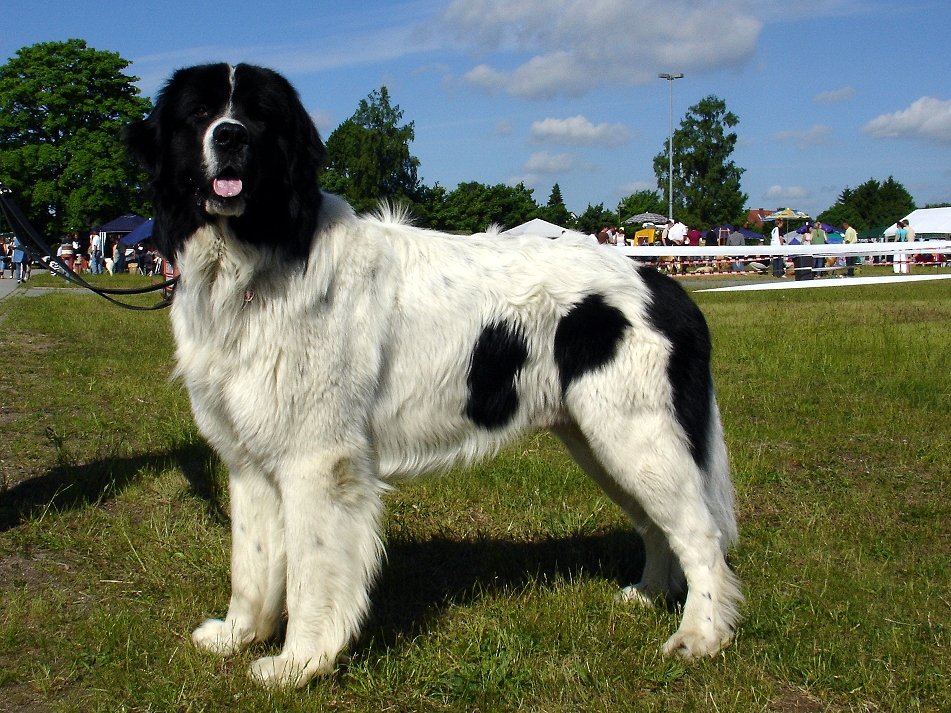
Landseer characteristics
| Trait | Rating | How common |
|---|---|---|
| Size | Giant | 6% of breeds |
| Energy level | Low | — |
| Trainability | High | 30% of breeds |
| Friendliness | Very High | 22% of breeds |
| Good with children | Very High | — |
| Grooming needs | Very High | 18% of breeds |
| Shedding | Very High | 12% of breeds |
| Barking | Low | 32% of breeds |
| Protectiveness | Low | 24% of breeds |
| Adaptability | Medium | 41% of breeds |
| Typical lifespan | 10 years | — |
| Hypoallergenic | No | — |
“How common” is the share of the 321 breeds we score that sit in the same band. Ratings describe the breed, not any individual dog.
Is the Landseer right for you?
The Landseer is a giant breed that requires real space: bigger rooms, a bigger car and a bigger food budget. In terms of temperament, it is renowned for its patience and gentleness with children and shows limited protectiveness and is friendly to callers. Day to day, the Landseer needs a modest daily walk and some light play to stay happy, which is the single biggest factor in whether it will suit your routine.
Exercise and daily routine
The Landseer needs a modest daily walk and some light play to stay happy. With low energy and medium athleticism, a consistent daily routine keeps this breed physically and mentally satisfied. Skipping exercise is the most common cause of problem behaviour, so match the Landseer to a lifestyle you can realistically maintain.
Grooming, shedding and upkeep
The Landseer is a serious grooming commitment, with daily brushing and regular salon visits and sheds constantly and keeps the vacuum busy all year. It is not considered hypoallergenic, so allergy sufferers should spend time around the breed first. Be aware this is also a breed that drools noticeably.
Temperament and training
The Landseer takes to training fast and works willingly and keeps fairly quiet, barking occasionally. It would rather have company and manages only brief spells alone, so plan for company or gradual alone-time training if you work away from home. Early socialization and positive, reward-based training bring out the best in this breed.
What stands out about the Landseer
Most breed descriptions call everything “loyal and intelligent”. These are the ratings where the Landseer genuinely differs from the rest of the catalogue — the things worth knowing before you commit.
- Drooling: High — the Landseer drools noticeably, which most owners only discover after moving in. Only 2% of breeds we score share this rating.
- Prey drive: Very low — the Landseer has unusually little prey drive. Only 3% of breeds we score share this rating.
- Size: Giant — the Landseer is a giant breed, which changes the car, the vet bill and the space a dog needs. Only 6% of breeds we score share this rating.
- Energy: Low — the Landseer needs less exercise than most breeds. Only 11% of breeds we score share this rating.
What a week with a Landseer actually costs you
| Exercise | Short daily walks are enough; it will not push you for more. |
|---|---|
| Coat | Daily brushing plus regular professional grooming. Skipping it does not just look bad — coats in this class mat, and matting hurts. |
| Time alone | Wants company. Long days alone are where the problems start. |
| Noise | Quieter than most breeds. |
Where the Landseer fits — and where it does not
Each verdict below comes from the ratings in the table above, so you can check the reasoning rather than take it on trust.
| Household | Verdict | Why |
|---|---|---|
| Apartment living | Depends | Size alone rules out small flats, though the temperament can suit one. |
| Families with young children | Good fit | Very high child tolerance, and sociable with people generally. |
| First-time owners | Good fit | High trainability without an unusually strong will makes the learning curve forgiving. |
| Homes with cats | Good fit | Very low prey drive makes cohabitation straightforward in most cases. |
| Long working days | Depends | Low independence — this breed wants company and shows it when it does not get any. |
| Allergy households | Poor fit | Very high shedding and no low-allergen coat recorded. |
Perfect for
- Water rescue
- European breed enthusiasts
- Gentle families
- Large properties
Things to consider
- Extremely rare breed
- Heavy shedding
- Large size
Which dog do you look like?
Take one photo and an AI model tells you which of our 321 breeds you most resemble, and which features gave it away. Free, no account, and your photo is never stored. It is a game rather than advice — but every match links straight into that breed's real guide.
See which dog you look likeFrequently asked questions
- Is the Landseer good with children?
- Yes — the Landseer is known for being very good with children and makes an excellent family dog.
- Does the Landseer shed a lot?
- The Landseer has very high shedding.
- How much exercise does the Landseer need?
- With low energy, the Landseer needs relatively little exercise — short daily walks are usually enough.
- How long does the Landseer live?
- The Landseer typically lives around 10 years.
- Can the Landseer live in an apartment?
- The Landseer is a larger breed and does better in a home with more space, though it can adapt with enough daily exercise.
- Is the Landseer easy to train?
- The Landseer takes to training fast and works willingly. Consistency, early socialization and reward-based methods work best.
- Can the Landseer be left alone during the day?
- The Landseer would rather have company and manages only brief spells alone. Build up alone time gradually and provide enrichment to prevent boredom.